IN THIS ISSUE (17) - 28 September 2026
📈 Bitcoin and other cryptos are rallying
🍎 Google and Apple need crypto personnel
🕶️ Meta puts its AI on your face
THE WEEK IN MARKETS
A week on from the Fed's first hike in three years, the market got the opposite of relief. The 10-year Treasury yield pushed to 5.16%, its highest since 2007, as Warsh's committee left a December hike on the table and traders took the hint. Brent held near $105 with the Iran war still keeping barrels offline, so the inflation problem the Fed is chasing did not exactly cooperate. Equities ignored all of it, the S&P 500 adding 2% and the Nasdaq 3.7% as the AI bid rolled on regardless. Gold slipped about 1.8% to around $4,310 as rising real yields did the damage geopolitics could not.
Crypto ran the other way. Bitcoin rallied roughly 10%, tagging $87,000 on Monday before easing back toward $84,000, with more than $800 million in shorts liquidated in a single day and spot ETFs roaring back to nearly $1 billion of inflows in a session. The alts led, as they tend to when risk appetite returns, Solana up around 18% and Ether up 10.6%.
🔥 WHAT'S UP: Solana | +18% | 1 week
💧 WHAT'S DOWN: Gold | -1.8% | 1 week
Data correct as at 24 September 2026.
ALPHA CHECK
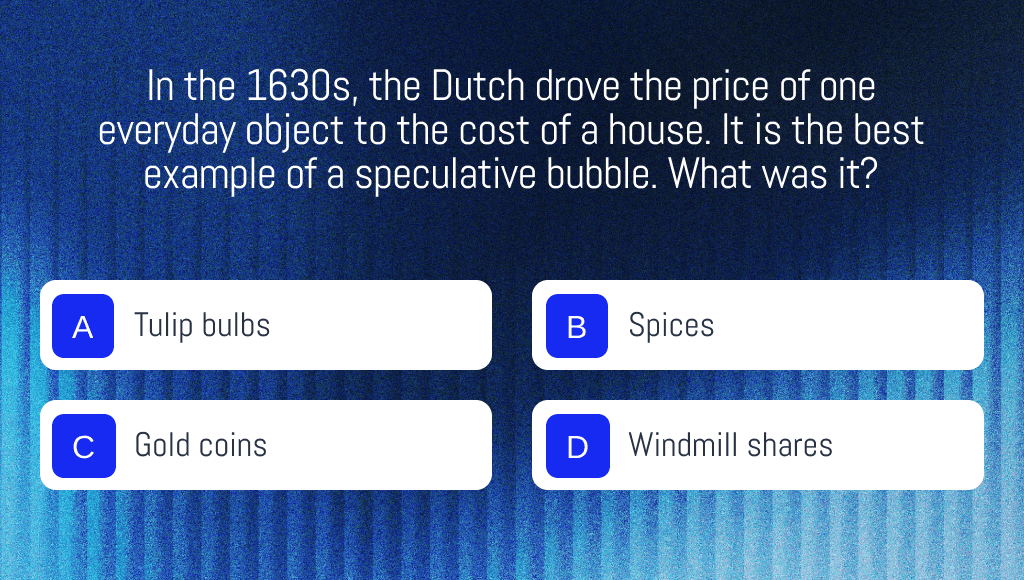
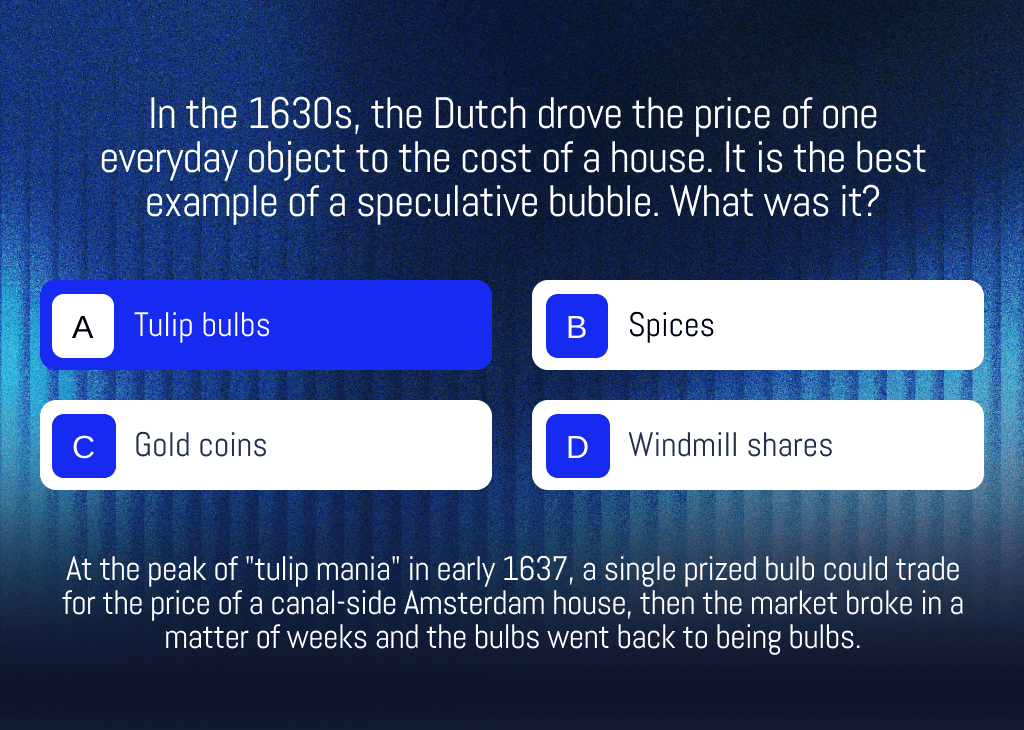
Got your answer? Read on to see if you nailed it.
THE BIG READ
Bitcoin stops taking orders from Washington
For most of this cycle Bitcoin traded like it was waiting for a permission slip. Rate expectations set the mood, the crypto bill set the ceiling. This week Washington handed it the two worst answers it had, and Bitcoin stopped asking.
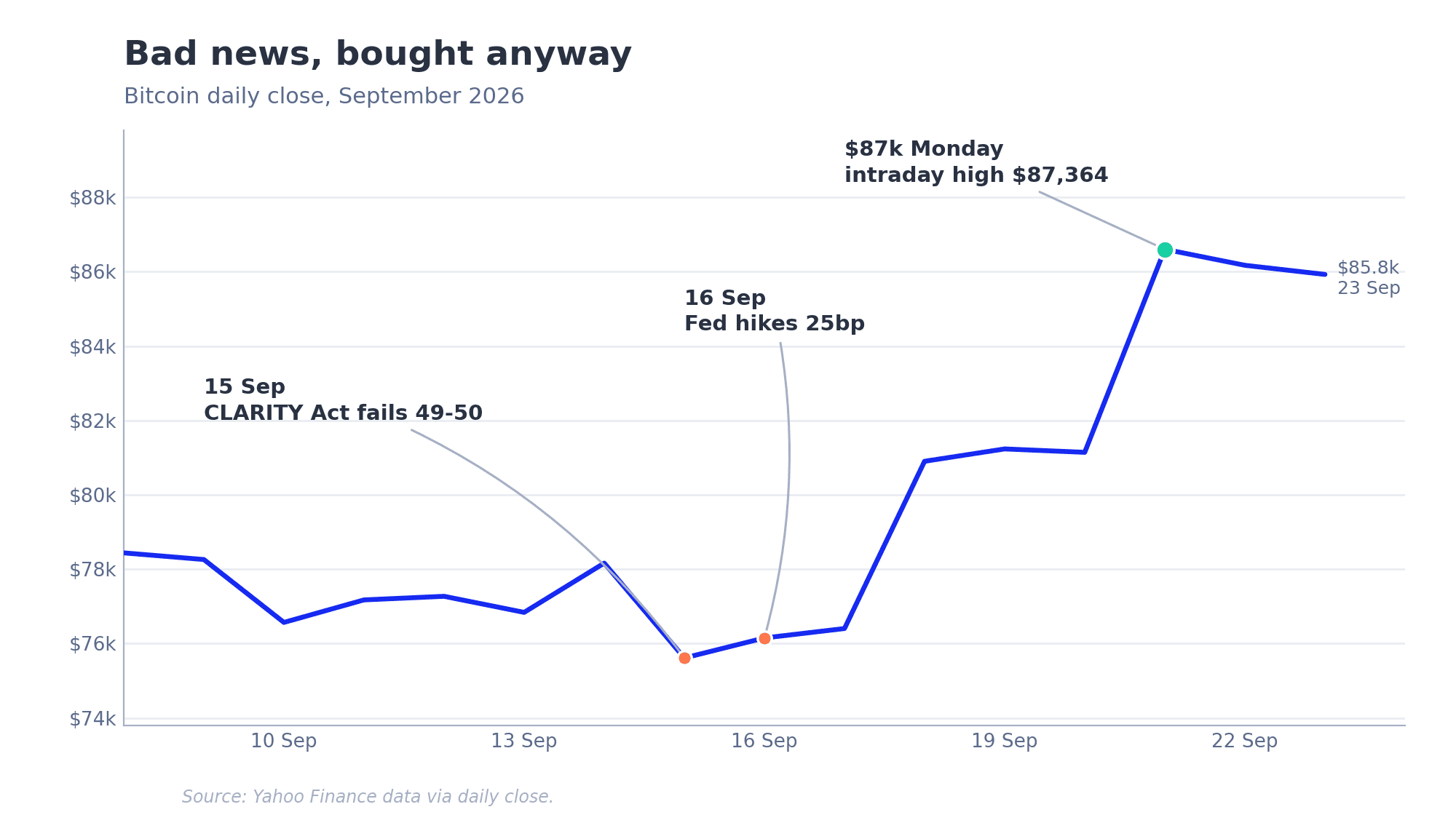
Inside 24 hours it got both barrels:
The CLARITY Act died in the Senate, its cloture vote falling 49-50 without a single Democrat crossing over, killing crypto's market-structure bill for the year.
The Fed raised rates a quarter point to 3.75-4%, unanimous, its first hike in three years, with the dot plot threatening another before December.
Bitcoin's response was to rally about 10% to an eight-month high, briefly tagging $87,000.
Two levers, both pulled, nothing moved
The clearest tell is the summer thesis itself. The bull case out of the June lows was built on rate cuts finally landing. The Fed did the precise opposite and the price went up anyway. When the story the market told itself for three months gets falsified and the tape does not blink, the story was never really the driver.
It didn't decouple from everything
Decoupling from Washington is not the same as decoupling from gravity. Strip the narrative and the move could be mechanical this time around:
Short covering did the heavy lifting. More than $800 million in short positions were liquidated in a day, over half of it Bitcoin, each forced buy shoving the next bear toward the exit.
The ETFs woke up late. Spot funds pulled in close to $1 billion in a single session, the fattest day of 2026, days after bleeding around $750 million during the CLARITY and Fed selloff.
The macro tape turned friendly. Oil slid on talk of US-Iran diplomacy, Treasury yields eased, equities were green.
So what is actually holding it up
Two of those three drivers have a shelf life. Liquidations run until the shorts are gone, then stop, and the ETF money arrived after the candle, which makes it confirmation rather than cause. The durable question is whether anything replaces them. A few candidates could:
Spot demand turning structural. If that near-billion-dollar ETF day becomes a pattern rather than a one-off, the wrapper stops being a forced seller and starts being a floor.
Treasuries still stacking. Corporate buyers kept accumulating straight through the vote, indifferent to the headline that was supposed to matter.
Regulators routing around Congress. CLARITY is dead, but the SEC's own crypto framework keeps rulemaking alive without a single senator's help.
For years the fastest way to move Bitcoin was to convene a hearing or leak a dot plot. That lever just stopped working. Whether what replaced it can hold the price up better than Washington held it down is the only question that matters now, and it is the one thing this week did not answer.
QUICK TAKES
🍎 Google and Apple go shopping for crypto staff
Neither has announced a product, but both just went hunting for the people who build them. Job listings this week show Apple recruiting a payments strategist fluent in stablecoins and tokenised deposits, and Google Cloud hiring a Web3 architect to help institutions tokenise real-world assets. Companies that are merely curious send someone to a conference. Companies that intend to build hire a senior person to own it. Read more
🤝 Presidents Trump and Xi buy two more months
President Xi made his first US state visit since 2015, tarmac welcome and all, and the headline deliverable was an agreement to keep the existing truce alive. The Busan tariff pause, due to lapse on 10 November, now runs to 10 January, with rare earths, chip curbs and Taiwan all parked for another round at summits in Shenzhen and Miami. Read more
🕵️ Zcash: privacy coin, public filing
Grayscale's Zcash ETF ran from half a billion to past $900 million within a month, riding ZEC to a fresh all-time high near $1,650. So the year's biggest bet on financial privacy is a fund that reports its holdings to the SEC, cannot use Zcash's shielding, and charges 2.5%, about ten times a Bitcoin ETF. The largest single deposit came from Grayscale's own parent. Institutions want the price, not the privacy. Read more
ALPHA CHECK - REVEALED
PROBABLY SOMETHING
Meta put Muse at the centre of Connect this week, a personal AI agent with a plush avatar named Jolly and a pitch about "personal superintelligence." Strip the framing and the job is to sit on your glasses and reorder your skincare. The new $1,299 VR headset got a footnote. Whether a friendly face-computer is the paying customer Meta's AI spending has been missing, or an expensive way to hear that your cardigan shipped, is the one thing the plushie will not tell you. Watch here